

Absolutely. Since this is for your website and you want to position yourself as a professional website designer who educates business owners, I’ve written this as a complete, SEO-focused blog post.
I also made it practical and easy to understand, targeting search intent around website hosting, website ownership, WordPress access, and hiring a website developer.
Before You Pay a Website Developer, Ask These 3 Questions About Your Website
Meta Title: 3 Questions to Ask Your Website Developer Before Paying
Meta Description: Hiring a website developer? Before you pay, ask these 3 important questions about hosting, ownership and access to protect your business website.
Focus Keyword: questions to ask a website developer
Suggested URL Slug: /questions-to-ask-a-website-developer/
Before You Pay a Website Developer, Ask These 3 Questions
So, you’ve decided to build a website for your business.
You found a website developer, discussed the project, agreed on a price, and you’re ready to make payment.
But before you send that money, there’s something important you need to ask.
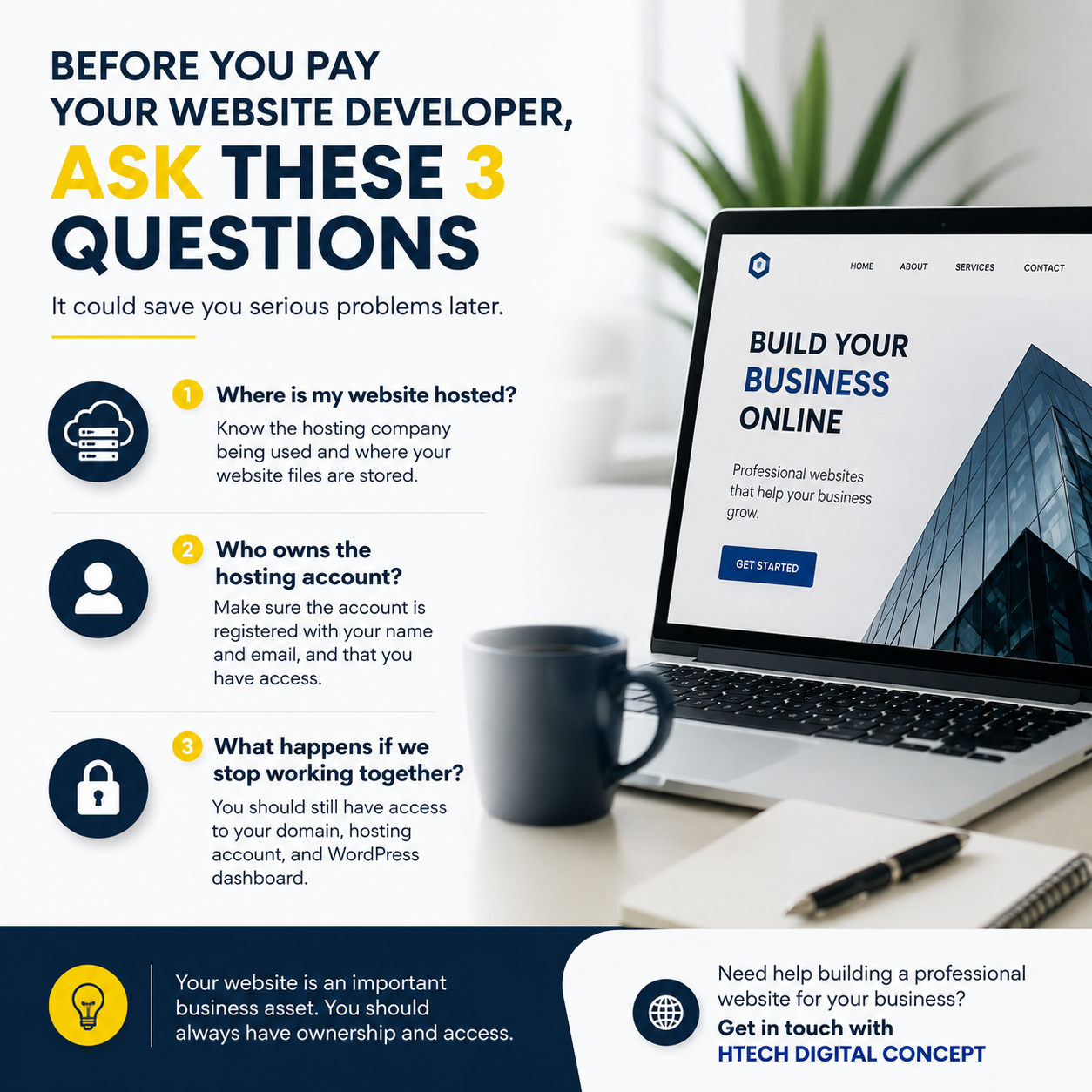
Where will my website be hosted, who owns the account, and what happens if we stop working together?
These questions may sound technical, but you don’t need to be a web developer to understand them.
Your website is a business asset. Just like your shop, office, equipment, or business bank account, you should know who owns it and how to access it.
Unfortunately, some business owners only discover this after they have a problem with their website developer.
The developer disappears.
The website goes offline.
The business owner wants to move to another developer.
Then they realise they don’t have access to the hosting account, domain, or even the WordPress dashboard.
That’s why, before you hire or pay a website developer, ask these three simple questions.
1. Where Will My Website Be Hosted?
The first question to ask is:
“Which hosting company will you use for my website?”
Your website needs hosting to be available online.
Think of it this way:
Your domain name is like your business address.
Your website is like your shop.
Your hosting is like the physical space where your shop exists.
Without hosting, your website cannot properly operate online.
Your developer should be able to tell you which hosting provider will be used for your website and explain why that hosting solution is suitable for your business.
For example, a small business website may have different hosting requirements from a large e-commerce store with hundreds or thousands of products.
You should understand:
- Which hosting company is being used?
- What hosting plan are you paying for?
- How much storage do you have?
- Is SSL included?
- Are backups available?
- How is the hosting renewed?
- Who is responsible for managing it?
You don’t necessarily need to understand every technical detail.
But you should know where your website is hosted.
Why this matters
Imagine paying for a website and discovering six months later that you don’t even know where it is hosted.
If something goes wrong, you may be completely dependent on your developer.
A professional website developer should be transparent about the hosting setup.
2. Who Owns the Hosting Account?
This is one of the most important questions you can ask.
Ask your developer:
“Will the hosting account be registered in my name and email address?”
There is a big difference between managing your website and owning your website infrastructure.
Your developer may help you purchase hosting, configure the server, install WordPress, and manage your website.
That’s perfectly fine.
But you should still have access to the account that controls your website.
Ideally, the business owner should have access to:
- Hosting account
- Domain registrar
- WordPress administrator account
- Website backups
- Business email accounts, where applicable
- Google Analytics
- Google Search Console
- Other important digital assets connected to the website
Your developer can have their own administrator access to help manage the website.
But you shouldn’t be completely locked out.
Here’s a simple scenario.
Imagine you hire a website developer today.
Everything is going well.
Two years later, you decide to work with another developer.
You ask the first developer for your hosting details.
They respond:
“The hosting account is under my name. I can’t give you access.”
Now you have a problem.
You may have paid for the website.
You may have paid for hosting.
But you don’t have control over the account.
This is why website ownership and access should be discussed before the project starts, not after a problem occurs.
3. What Happens If We Stop Working Together?
This is probably the question many business owners forget to ask.
Before you pay your website developer, ask:
“If we stop working together tomorrow, will I still have full access to my website and digital assets?”
The answer should be yes.
Your developer may be responsible for building and maintaining your website, but the website is ultimately a business asset.
You should know how to access your:
- Domain name
- Hosting account
- WordPress dashboard
- Website files
- Database
- Backups
- Business email
- Analytics accounts
- Search Console
- Other important services connected to your website
You may not personally manage all of these.
That’s okay.
You can hire a professional to manage them for you.
But there is a big difference between choosing not to manage something and not having access to it at all.
The simple rule
Your developer can manage your website, but you should not lose ownership of your website because you changed developers.
Website Developer vs Website Owner: What’s the Difference?
This is where many business owners get confused.
Your website developer is the person or company you hire to build, maintain, or improve your website.
You, as the business owner, should have ownership or appropriate control over the key assets associated with your business website.
Think about it like hiring a builder to construct your physical shop.
You wouldn’t normally give the builder permanent ownership of your shop just because they built it.
The same principle applies to your website.
A developer can:
- Build your website
- Install WordPress
- Manage hosting
- Update plugins
- Fix technical problems
- Improve website performance
- Maintain security
But you should still understand who owns the accounts and who has access.
This creates a healthier relationship between the business owner and the website developer.
What Should You Do Before Hiring a Website Developer?
Before you start your next website project, create a simple checklist.
Ask your developer:
Hosting
- Where will my website be hosted?
- What hosting provider are you using?
- What happens when the hosting plan expires?
- Who will pay for the renewal?
Ownership
- Who owns the hosting account?
- Who owns the domain?
- Whose email is used to register the accounts?
Access
- Will I receive my login details?
- Will I have access to WordPress?
- Can I access my hosting account?
- Can I access my domain registrar?
After the Project
- What happens if we stop working together?
- Can another developer take over the website?
- Will I have access to my website backups?
- What happens if I want to move to another hosting provider?
These questions don’t mean you don’t trust your developer.
They simply mean you understand that your website is an important part of your business.
Should Your Website Developer Manage Your Hosting?
Yes, they can.
In fact, many business owners prefer to let their website developer manage the technical side of their website.
There’s nothing wrong with that.
A good developer can help you:
- Choose the right hosting plan
- Configure your hosting
- Install WordPress
- Set up SSL
- Manage backups
- Monitor website performance
- Handle technical updates
- Improve website security
The important thing is to make sure you still have appropriate ownership and access.
Think of it like hiring an accountant.
Your accountant may manage your financial records, but that doesn’t mean you stop being the owner of your business.
The same principle should apply to your website.
Your Website Is More Than Just a Design
Many business owners think of a website as simply a collection of pages with images and text.
But your website is much more than that.
It can become one of your most important digital business assets.
It can help you:
- Generate leads
- Sell products
- Receive enquiries
- Build credibility
- Showcase your work
- Collect customer information
- Rank in search engines
- Provide information 24/7
That’s why it’s important to treat your website seriously from the beginning.
Don’t only ask:
“How much does a website cost?”
Also ask:
“Who owns it?”
“Where is it hosted?”
“Who has access?”
“What happens if I change developers?”
These questions can save you from unnecessary problems later.
Final Thoughts
If you’re planning to build a website for your business, don’t rush into the design.
Before you pay your website developer, make sure you understand the technical foundation behind your website.
Ask these three questions:
1. Where is my website hosted?
2. Who owns the hosting account?
3. What happens if we stop working together?
You don’t need to become a website developer to understand these things.
You just need to know enough to protect your business.
A good website developer should not be afraid of these questions.
In fact, a professional developer should be happy to explain the process and make sure you understand how your website is set up.
Your developer can build it.
Your developer can manage it.
Your developer can maintain it.
But at the end of the day, your website is part of your business.
Make sure you know where it is, who controls it, and how you can access it.
Frequently Asked Questions
Should I own my website domain name?
Yes. Ideally, your business should control its domain name and have access to the account where it is registered. Your developer can help manage the domain, but you should not be completely dependent on them for access.
Should my website developer own my hosting account?
Your developer can manage your hosting account, but you should understand who owns the account and make sure you have appropriate access to it.
What happens if I stop working with my website developer?
You should still be able to access your domain, hosting, WordPress dashboard, and other important website assets. Your new developer should be able to take over the website if necessary.
Can I change my website developer later?
Yes. A properly managed website should be transferable to another developer or agency. Make sure you have access to your important accounts and website backups.
What is the difference between a domain and web hosting?
A domain is your website’s address, such as yourbusiness.com. Web hosting is the server space where your website’s files are stored so people can access your website online.


